

CBS’s daytime drama GUIDING LIGHT will broadcast its final episode on Friday, September 18, 2009. At the time of its final broadcast, the series will have spanned 72 years and more than 15,700 episodes on television and radio.
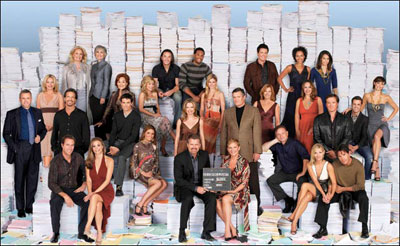

“GUIDING LIGHT has achieved a piece of television history that will never be matched; it has crossed mediums, adapted its stories to decades of social change and woven its way through generations of audiences like no other,” said Nancy Tellem, President, CBS Paramount Network Television Entertainment Group. “This daytime icon will always be an indelible part of CBS’s history, with a legacy of innovation and reputation for quality and excellence at every step of the way. While its presence will be missed, its contributions will always be celebrated and never be forgotten.”
“No show in daytime or prime time, or anytime, has touched so many millions of viewers across so many years as GUIDING LIGHT,” said Barbara Bloom, Senior Vice President, Daytime Programs, CBS. “We thank the cast, crew and producers – past and present – who delivered this entertainment institution, the beloved characters and the time-honored stories to our audience every day for seven decades. It’s been a privilege to work with such an extraordinarily talented group of people.”
The radio show’s original storyline centered on a minister named Rev. John Ruthledge, and all the people of a fictional suburb in Chicago called Five Points. Today’s show takes place in the fictional town of Springfield, and revolves around the Spaulding, Lewis and Cooper families. Throughout its historic tenure on the Network, GUIDING LIGHT has been the recipient of 69 Daytime Emmy Awards, including three for Outstanding Daytime Drama Series.
The show has broken ground with stories such as cancer, teen pregnancy, sexual harassment, alcoholism, abuse, AIDS and post-partum depression and, in 2008, premiered a brand-new daytime production model, featuring permanent sets inside its New York City studio and approximately 20% of the production shot in exterior scenes in the town of Peapack, N.J. In addition, directing and editing were changed to be done digitally and almost simultaneously, giving the sets a more realistic feeling and eliminating the need for production suites.