


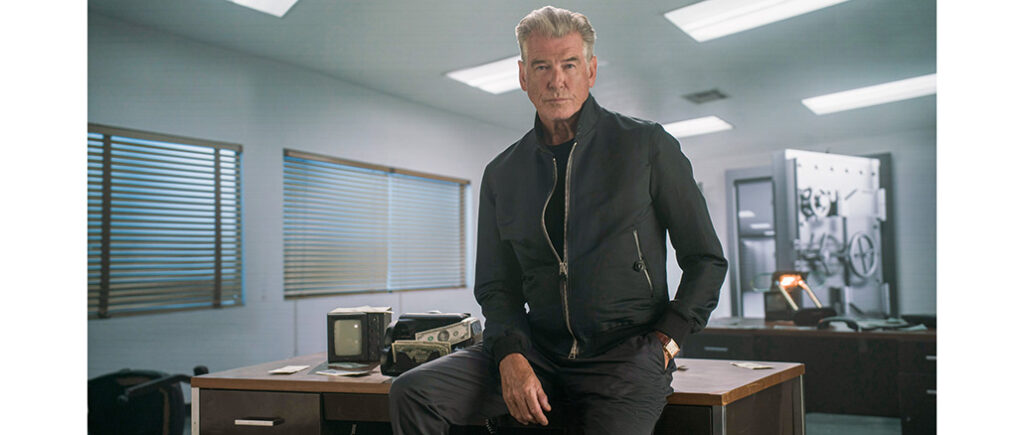
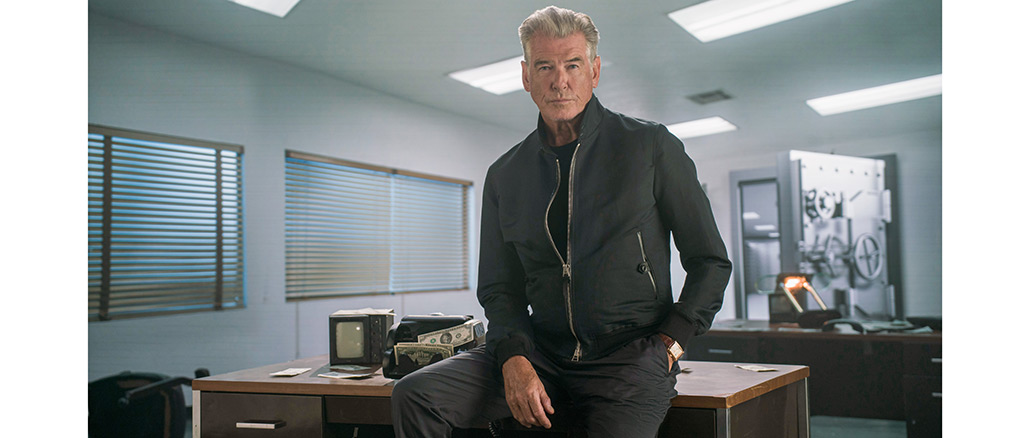

“The masterminds behind every great heist see what most people don’t,” says host Pierce Brosnan during his introduction to the first episode of the new nonfiction series History’s Greatest Heists, airing Tuesdays on History beginning Feb. 7 at 10pm ET/PT.
Brosnan’s insight is quite accurate, and thanks to this series, viewers will now be able to get some glimpse into what these criminal geniuses saw that allowed them to pull off, and in some cases get away with, incredibly bold thefts that rival anything seen in a Hollywood film. In a number of instances, they were able to see the slightest cracks in even the most seemingly impenetrable security systems, and to pinpoint and exploit the failings of the humans behind some of the security.

“They’re rogues,” Brosnan explained to us further in an interview, describing the brash thieves chronicled in this series, and why fictional and real-life stories like these continue to be so compelling to audiences.
“They’re very charming men, a lot of these guys. … They know how to act. They know how to deal with people. They know the psychology of the world. When you have that person that’s charismatic, and also breaking the law and doing something that is really just out of bounds, off the charts, seriously, bad news if it goes wrong … the movies are made of that. … We like to see people break the law, try and steal things, trying to steal money.
“I think that’s the appeal of [this] show, the audacity and the baldfaced courage that these men portray in real life, and the planning and the scheming. … Some of these guys were just off-the-planet kind of crazy and also brilliant. Just brilliant. It takes balls to go out there and do what they do.”
The eight episodes of History’s Greatest Heists uncover the meticulous planning, daring execution and shocking aftermath behind such ballsy characters pulling off some of the most elaborate real-life heists in history, including the notorious 1978 Lufthansa heist (familiar to fans of the movie Goodfellas) at New York’s JFK Airport, in which the thieves stole cash and jewelry worth roughly $24 million in today’s money; the half-billion-dollar art theft from Boston’s Isabella Stewart Gardner Museum in 1990; the 2003 heist of over $100 million worth of diamonds, gold, silver and other types of jewelry in Antwerp, Belgium, which has been dubbed the “heist of the century”; and more. The series uses dramatic re-creations, first-person witness accounts, and special effects that embed Brosnan into each heist to break down every aspect of the plans and put viewers in the center of the action.
As an actor, Brosnan has played characters who have famously done their share of sneaking into places, stealing items and then slipping back out, generally unscathed — notably as James Bond and as the title character in the 1999 remake of the classic heist film The Thomas Crown Affair. So he’s a natural to guide viewers through these real-world heists, and he does so with his usual suave flair and a touch of wry humor, helping make each episode feel like a fun and suspenseful mini-heist movie where you are so astounded by how these thieves concocted and executed their schemes that you almost root for them to succeed even as you also want to see them get their comeuppance.
“I love heist movies,” Brosnan says, echoing the sentiment of many viewers throughout film history. “I understood why [History] came to me [to host], having done Thomas Crown, which I made a long time ago but still kind of holds a place in people’s hearts. I thought it was an appealing way to go into it and to do this kind of work.”
As fun and exciting as these stories can be, there is a fine line that Brosnan and the series successfully walk, making the events thrilling without necessarily glorifying the culprits, especially in cases where a heist involves violence.
“As an audience, you want them to get away with it,” Brosnan offers, “[but] you don’t want anyone to be hurt. The ones that have violence, they’re just … it’s the darkest side of the game, which is a knife’s edge. … I think we found a good balance, and I’d like to think that I, as an actor, understood the material and understood that fine line, that these are men who are breaking the law. There are consequences for their actions. … However you cut it, they’re out of line.”
Along with Brosnan’s overarching narration, there are also onscreen interviews with experts in security, criminology and other fields who break down details of each heist; the first half of each hourlong episode sets up the planning, the gathering of the team, etc., with the second half presenting a blow-by-blow look at the heist itself, all reenacted with actors.
“It takes a bold plan [and] the right team,” Brosnan adds at one point in that first episode as he describes how a great heist is pulled off. That description could also apply to what it takes to put together a compelling television series, and History’s Greatest Heists has just such an effective plan and team in its own execution.