


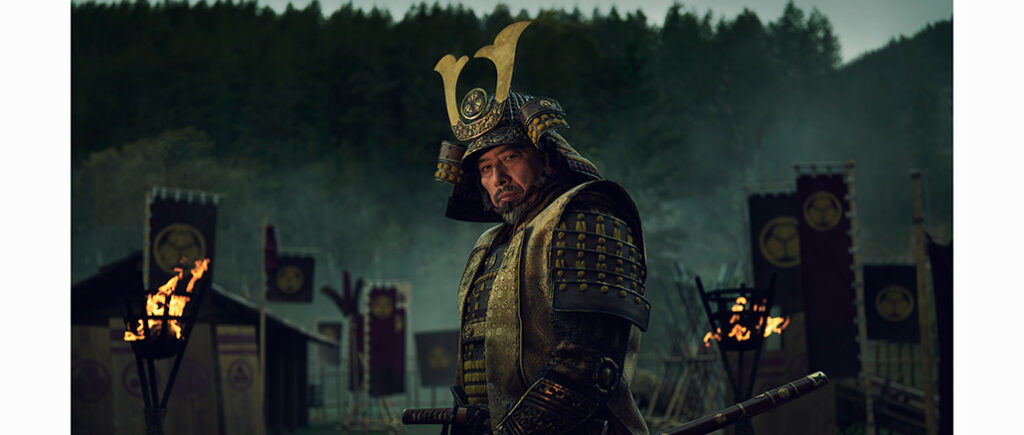
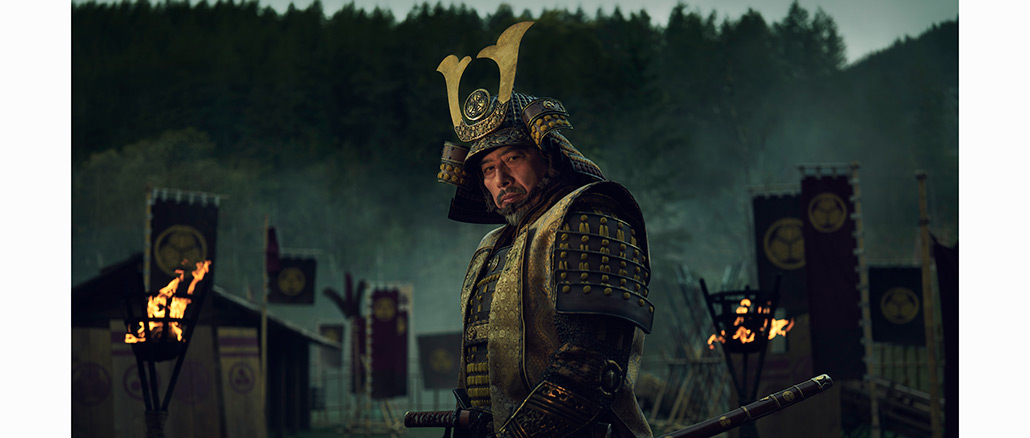

Based on the epic 1975 novel that also inspired the Richard Chamberlain miniseries in 1980, this FX’s new Shōgun (Tuesdays at 10pm ET/PT beginning Feb. 27) series takes place in feudal Japan and follows the rise of Lord Toranaga, a powerful Japanese magnate, through the eyes of an English sailor named John Blackthorne — a character modeled after William Adams, the first English navigator to reach Japan in 1600. Many of the other characters were modeled after real historical figures important to Japanese culture as well, including Lord Toranaga, played by Hiroyuki Sanada.
“I played that role before. I played him twice. And also his opponent, Ishida Mitsunari,” said Sanada, who was also a producer on the show for the first time. “I already learned about the real history as a Japanese actor. This one is an original character. Because this is based on the novel, I tried to forget history and focus on this new version of the script.”
“Initially I think we came at these characters thinking we could broaden what they did or even deepen some of the mischief,” said Rachel Kondo, a cowriter and executive producer who spearheaded this series with her husband Justin Marks, who is also a cowriter and executive producer. “But we had to remember that we were working with figures who have been studied, figures who exist in the consciousness of a nation. We had to really understand that we need to write to the spirit of the character and not just make random inventions that would suit our purposes.”
Though it is a historical series akin to The Last Kingdom, part of what makes the show so successful is that you don’t have to be a history buff to enjoy it, because its focus on character and story highlights timeless themes: forbidden love, betrayal, secret alliances, and all the aspects that unfortunately arise when power is shifted and sought after. “It is a very universal drama,” added Sanada. “Not just action, not just violence, geisha, stereotypes. Very universal, very poetic. I love it.”

“He was really a master storyteller,” said Marks of Shōgun author James Clavell and the 1,152 pages of source material they worked from. “There are areas in the latter half that we had to condense, simplify or just heighten for specific reasons that will become clear. But everyone came together with a shared affection for the book.”
The show, which was shot in and around Vancouver, is visually impressive as well. It’s clear a lot of work was put into accuracy and presentation. “We had to bring Japan to Canada. And we really did. In terms of quantity, I feel like we brought half the population, the crew of the show,” Marks said. “In the early days, it was taking so long, because you’re trying to get 200 extras out there in full nakazori with all their costumes and the obis tied right and it’s taking so long because we’re all trying to learn our way through these costumes. So, we thought to just bring our whole wardrobe department over from Japan because they can tie an obi in five seconds flat. Then suddenly the extras are showing up on time and everything was going fast.”
“Every single costume that came to the studio, I checked, I taught how to wear,” Sanada added. “A French designer creating kimonos, but he doesn’t know how to wear one!”
This was only one of many challenges the crew faced; in addition to making it historically and regionally accurate, there were several language barriers to break through, both on set and onscreen. Much of the show is in Japanese, and many of the actors are from Japan.
“The process of translation was very complicated, and it went through a number of people in this giant telephone game that we did to polish it to get it to what it is,” Marks added. “Even the design of the font and the positioning of the font and the timing of the words onscreen was something that we would go through very carefully. If you look at the subtitles on our show, they’re higher than most subtitles onscreen. They’re closer to the actor’s face. I hate the dive going up and down.”
“We went back and forth many times,” Sanada agreed. “It was like a jigsaw puzzle. When we completed the 10 episodes, I was like, ‘Yes!’”