
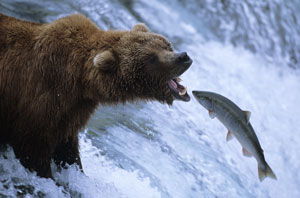
If you saw the astonishing natural history series Planet Earth a few years back, you’ll be happy to know that the BBC and Discovery Channel have teamed on a similar new series, premiering in May.
Nature’s Most Amazing Events is a six-part high-definition series filmed over the course of two years that chronicles breathtaking natural events that take place across our planet, and which are triggered by seasonal and climate changes — from the flooding of the Okavango Delta in Africa to the great summer melt of ice in the Arctic.
In addition to following Planet Earth‘s example of showcasing remote areas of the world, this program also uses technical innovations as its predecessor did, including time-lapse and macro photography, and high-definition stablized camera mounts often used for the first time in a natural history film.
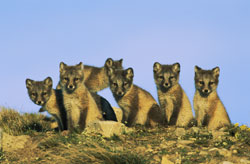
Again, filmmakers patiently waited to be in the right place at the right time to capture animal footage such as tiny grizzly bear cubs emerging from their den in snow-covered mountains, baby elephants struggling to survive against drought and lion attack in Africa, humpback whales hunting as a team, the world’s largest concentration of dolphins and sharks gathering off the coast of South Africa and polar bear families navigating their way on ever-thinning ice.
Nature and documentary lovers, be sure to check out the series May 29-31 on Discovery Channel.
Here are some selected episode clips from the series as it was shown in England, under the title Nature’s Great Events. Please note that, like Planet Earth, the series is being reformatted for American viewing, and might have a different narrator than Sir David Attenborough (unfortunately).
_________________________________________
Bear — Credit: Eric Baccega/Discovery Channel/BBC
Foxes — Credit: Norbert Rosing/Discovery Channel/BBC
1 Trackback / Pingback
Comments are closed.