
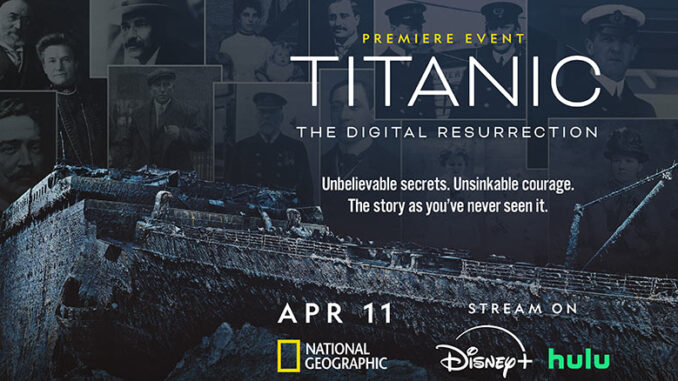
 © 2025 Disney. All rights reserved. /National Geographic
RMS Titanic has captivated the world since it sank into the Atlantic and claimed the lives of more than 1,500 people on its maiden voyage in April 1912.
The discovery of the wreck in 1985 began a new era of exploration into the legendary vessel, and scientists and historians continue to piece together the puzzle of the world’s most famous maritime disaster.
In Nat Geo’s special Titanic: The Digital Resurrection (Friday, April 11, at 9pm ET/PT), researchers present a 1:1 “digital twin” of the ship and its surrounding debris field compiled from over 700,000 scans taken by two unmanned subs.
“The shipwreck is the last surviving witness of the disaster,” says Titanic expert Parks Stephenson. “With the digital twin, you can see the entire wreck site. Now I have a better view of Titanic than I ever did at the Titanic [site].”
Historians, metallurgists and shipbuilding experts examine the detailed model for clues into the ship’s final hours, and the last actions of the crew and passengers as the ship went down.
It’s also an important snapshot of a vanishing historical relic: Iron-eating bacteria (called “rusticles”) continue to feed on the wreck, and the remaining structure could collapse within the next decade.

Be the first to comment